
Notes from the Historical Novel Society’s 2026 Conference in Maynooth, Ireland
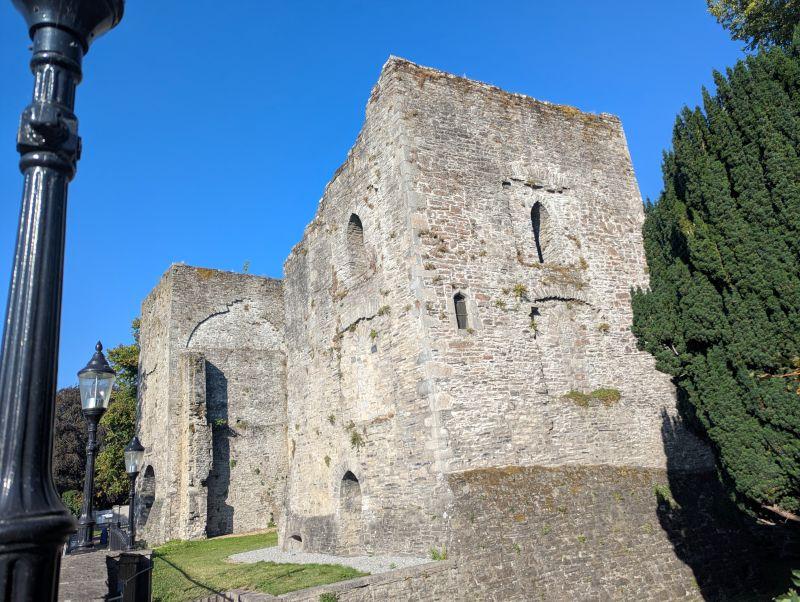
For those of us who love reading and writing, attending writers’ conferences is always a treat. Some, however, consistently shine. I’d say the Historical Novel Society’s conferences are among the best: everybody you meet has interesting things to say!
Back in the days before I X’d Twitter from my life, I used to live-Tweet from conferences. Now I type my notes instead and am happy to share them with you here. The HNS organizers in Ireland did a stellar job: I didn’t attend any dud sessions!
These notes will interest authors and people who are curious about the process of researching, writing and publishing historical novels. They are far from polished, but if I spent more time on them I’d never get back to writing my book!
Table of Contents
Vaseem Khan – Who owns the Legend: From Bombay to Bond
Khan’s personal story is fascinating: born and raised in England, his life took a turn when his boss was going on a business trip to India and said “You look like you can speak Indian” (yep, that’s what the man said!) and asked him to come along. That got Khan interested in learning about his heritage. He now explores India’s history through crime and detective novels, including writing India’s first female detective series. I’m eager to tuck into that and to Khan’s series about an Indian police inspector who finds himself caring for a baby elephant.
He’s also become an expert on writing “the other”. See https://Vaseemkhan.com/diversity-project which includes a video series and other information about writing cultural diversity in fiction.) A few of his thoughts:
· Be aware of the space you are taking up (e.g. a white southerner writing from perspective of a black slave)
· Understand what you don’t know (knowledge gaps and biases)
· Then do your research; using multiple sources from the target community and sub-communities
· Avoid stereotypes (e.g. nerdy Indian; confusion of Sikhs, Hindus and Muslims; be careful with ethnic slang
· Use empathy (even if they are villains or have negative traits);
· Give them a genuine purpose in the plot; don’t shoehorn the minority in for no reason
· Sensitivity readers can help, but they’re not the whole answer
Martina Devlin vs John Banville – Accuracy vs. Fiction
Martina Devlin’s novels include Charlotte, about Charlotte Bronte, and the upcoming, Glorious Monsters, about Mary Shelley. She does a lot of historical research about the time, place, and people she writes about, but doesn’t feel she has to include it all or stick straight to history. Certainly, what she writes has to be “within the bounds of possibility”. As she put it, in writing about the Titanic, she couldn’t move the iceberg but could decide which fictional characters could live and die.
Prolific Irish novelist John Banville, by contrast, said he doesn’t bother much with researching the people he writes about or worry about sticking to the facts of their lives. Perhaps he was being disingenuous, as he is a highly regarded author of books such as the ‘Revolutions Trilogy’, about key figures in the history of science (Kepler, Copernicus, Newton). But his attitude was off-putting, to me at least. I understand that historical novelists have to make up some things. Obviously, we don’t know what the real historic figures were actually thinking or what they said in many cases. But I want to be confident that if I’m reading about a historical figure they are acting in a way that is true to what is known about them. In my own upcoming novel, Red Rules, for example, I decided to rewrite the climax because I concluded that it was inconceivable that Leon Trotsky, in late 1918, could have been convinced to show mercy to a traitor, even if the traitor had a strong personal reason for having sold secrets.
Beyond Kings and Queens: Giving Voice to the Hidden Folk – Jean Gill, Matthew Harffy and Justin Hill
We know quite a bit about what even royalty from a thousand years ago did and how they lived, but there’s a lot we don’t know, especially when it comes to everyday folks. Jean Gill, Matthew Harffy and Justin Hill discussed how to fill in some of the gaps.
Justin noted that poetry from the era (especially in older times, when much relied on an oral tradition) can give you a sense of everyday life and preoccupations of the era. He also commented that things like Greek vases and other types of ancient art can show everyday people serving the rich and give ideas about status and rituals.
Jean said she had learned a lot from a British Museum exhibit of medieval women in their own words. Although they had to fight to be taken seriously there were women who were doctors, lawyers, landowners, and other positions we assume were limited to men hundreds of years ago.
She also advised staying on top of recent research in your era, and digging deeper. For instance ancient Viking graffiti had been found on runes. It has recently been concluded that one of them was by a woman. Based on her name, a leading researcher was able to pinpoint that she was likely the daughter of a well-known historical figure who’d murdered another well-known person. (Sadly, I didn’t catch the names. Sorry!)
Matthew urged novelists to think about what everyday things people would have had to do and then investigate how they’d have done it. For example, we know that beer was consumed, but how did they brew beer before hops? Turns out they used gruit (a blend of herbs, spices and other plants. Then the ale was boiled. It would go off in three days because there was no safe way to store it. These little details give a sense of authenticity to your book. Think about what crops were available and how that would have affected cooking. (Hard to imagine Italian cooking without tomatoes, but they didn’t reach Italy until the mid-16th century!)
Also think about how mindsets were different then from now. As Matthew pointed out, slavery was common throughout most of history and in most places: it was totally accepted as normal. In the 6th century there was a massive famine in Britain when crops failed. As a result, there was cannibalism. When people were truly desperate a father would literally place his head in the hands of the lord, offering himself and his family into bondage for life to the lord in exchange for food.
Jean also talked about mindsets:
o If you knew that 1/3 of women died in childbirth, that might change your views on sex as a pleasurable activity if you were a woman. This would have an impact on marital (& extra-marital) relations.
o If you believed in demon possession, you might feel much more leery of strangers. (Christians at the time of her book thought they’d smell bad if possessed, so if you were next to someone who smelled bad, you’d be afraid of them.)
o Although you need to think about “how did they manage without …. ?“ (e.g. Navigation tools, sight, hearing), be aware that this is a deficit model, which is a bad approach because they didn’t know what they were missing (like us before computers). [Tema’s comment: Mind you, before computers we were frustrated by the difficulty of doing things – like historical research – that are much easier now. So it’s not like we were unaware of the difficulties.]
o How were people with disabilities viewed/treated?
o Don’t be ethno-centric or geo-centric: Arab cartographers had south at the top of the map (Australians would like to bring that back!)
o Women can set men on each other: if you’ve got a big man, can wind him up and set him lose on another man
o Prof Judith Jesch, who was a prof of Viking Studies has a new book about what women really did in the Viking era. Yes, there were occasional women warriors but that’s rare. If you want women to have adventures, they shouldn’t have young children (unless they have a lot of servants and are willing to leave the kids with someone else).
Lenore Hart – Entering Contests
There are many writing contests, and they can help authors get noticed by potential publishers, agents and readers.
CONTEST SUBMISSION TIPS
– Follow rules precisely; including formatting
– Look at the judges in a competition: if they never publish work like yours, may not be worth submitting
– Look at previous winners: if they are all, for example, experimental and yours isn’t, it’s bad fit
– Novel contests are typically the most expensive to enter.
– Early in your career start w smaller contests where you have a greater chance of winning
– Post-publication prizes are often just money grabs targeting self-published authors
– If there’s a significant fee, research whether the contest is legit
– Make sure you have Microsoft Copilot turned off! Otherwise you run the risk of them barring your entry because it shows AI use.
OPENING PAGES
– Is everything the reader needs to know there in the opening page? Are the 5 W’s on the page? Who’s there (incl age, gender), what’s going on, where are they, why are they there? Time period. [Tema’s thought: agreed that the basics need to be there but what about evoking curiosity? I guess the key is don’t withhold basic info]
– But don’t go overboard the other way
– POV needs to be established right away (and consistent with what you are revealing. Don’t have a first person narrator describing something s/he can’t see)
– Don’t start w clichés, such as waking up, doing a mirror inventory as an excuse to describe what the narrator looks like, etc.
– Need enough description that reader can see the scene (and use other senses, not just vision!)
MIDDLE
– Need constant complications/things happening (even if they are primarily happening internally)
– Follow your narrative theme; don’t put in extraneous scenes
– No walking and thinking scenes: thinking is fine, but not pages and pages of it
– Dialogue should reveal something about the character, the setting (e.g. poverty, tidiness), or advance the plot
– Be specific: not just a room w a chair. Give us more so we actually visualize the room and the chair. [Tema’s thoughts: think about the difference between describing an interrogation room vs a cozy living room. And especially if this is the first time your narrator has encountered such a room – then you’d need to describe more of it.]
ENDING
– In contests with word limits, you don’t need to go to the limit: look for most powerful place to quit.
Essie Fox – Gothic Legends for Today’s Readers
With Karen Sullivan – Orenda Books (historical fic, literary translations, etc.)
· Essie – do a ton of research first; then set it aside and get writing
· Use all 5 senses
· When a character walks into room only describe what he’d notice and how he’d notice it (if it is a familiar room, he won’t be noticing the type of wood of the furniture is made of, for e.g.)
· Dangerous: a Lord Byron Mystery
· Catherine: a retelling of Wuthering Heights
· She normally spends 6 months on research then 12 on writing
· Orenda Books – small, but high-quality publisher; excellent at social media; close relationships with authors [must be agented; don’t accept unsolicited m/s]
· The original Wuthering Heights got bad reviews in author’s lifetime
· Karen: in historical fiction, when people buy a physical book, they want it to be a beautiful book. So if you are going to do a hardcover, make it special.
Louse Fein, Amanda Geard – discovering book ideas
· Amanada is a geologist in day job; that shows in her structured approach to research and writing
· Louise Fein’s latest: Book of Forbidden Words – she was looking for a similar time/disruption in history to AI now; so writing about the introduction of the printing press and how that affected people
· Both are traditionally published. If you want to get a traditional publisher deal, you need a fresh angle on a popular genre (e.g. Vaseem Khan’s detective series where the detective is caring for a baby elephant)
· Louise – starts with theme; Amanda with setting (authors typically say they start with characters because they think that’s what literary icons do)
· Can also start with an occupation (e.g. Tracey Chevalier does this – stained glass makers, embroiderers), with iconic buildings (e.g. Fiona Davis), works of art)… Whatever inspires you.
· But ultimately you need to put in common human themes (e.g. jealousy, love, etc.)
· Don’t be afraid to try different approaches/POV. Louise’s book, Daughter of the Reich, was originally written from the Jewish perspective, but that didn’t work; later she tried 1st person from kid brainwashed by nazi propaganda (had also tried past tense but changed to present tense).
· Louise: theme and hook come at the start of the process
· Amanda – I start with excel spreadsheet (she typically writes mystery); in my genre often need a modern timeline
· At 30,000 words decide whether or not to give up on the book
· Louise: no excel for me; I’m chaotic; w every book I throw away multiple drafts; tens of thousands of words
· Probably every author has had a book that didn’t work ; sometimes you can’t tell or won’t admit it to yourself; so need someone you can trust
· You do have to send the publisher an outline, but you don’t have to stick to it
· Louise: it’s all about how it’s pitched, so if writing in an “unpopular” era, don’t pitch it as a historical novel. What other elements of your book are a hook?
· Her 2nd book was in 1920s about eugenics; they originally wanted her to reset it in WW2; she refused but discussed how else they could position it; she also agreed to add a few more American references
· Add layers (eg ticking clock; other barriers or challenges) to your pitch
· Gill Paul suggests reading blogs about publishing trends
o She also looks for potential anniversaries to tie into (eg. The Secret Wife), Sinking of Titanic, etc
o If doing that, need to think well in advance
o Essie’s book was brought forward by 9 months to leverage the Wuthering Heights new movie release
o Look forward a few years in the calendar to see what’s coming up that you could tie a pitch and novel into (e.g. anniversaries of a revolution)
Misrepresented Historical Figures – Leslie Carrol, Ann Easter Smith, Margaret George
Leslie Carroll (writes as Juliet Grey) – author of Confessions of Marie Antoinette
Ann Easter Smith – Wars of Roses book series: This Son of York (re Richard III); no evidence that he ever murdered the princes in tower
Margaret George – Confessions of Young Nero (my book review of it at https://temafrank.com/book-review-the-confessions-of-young-nero/)
– All of these books were about people who were misrepresented in history
– Leslie: travelled to the surviving palaces to see how they lived; walking in their footsteps; sensory experience; read lots of bios but try to find at least 3 corroborating sources. The problem with Marie Antoinette was that everybody hated her as the foreigner in court, so it is hard to get a different perspective. She got flack for doing things that they all did, like wearing multiple gowns per day
o I had costumes made for me with boning to learn how it would have felt to wear and move in them; found recipes for her perfume, candles,; music
o Marie Antoinette never said let them eat cake! (It was Louis XIV who said “L’etat c’est moi” and built pleasure palaces; the affair of the diamond necklace – she never wanted it in the first place; was a con started by an enemy; nobody believed MA’s side of story; were only 7 prisoners in the Bastille on the day it fell; she’d been raised in Austria to go out and distribute alms to the poor; but the Bourbons were very different; as the monarchy was falling, she was literally being blamed for bad harvests
– Anne: I go and walk everywhere I write about, to get a sense of the geography (e.g. how long would it take to walk from St. Paul’s to Richard’s house. Also try to consult archivists (though big sources may sneer at you as a novelist vs an academic and refuse to let you access stuff); Richard III society – they have lots of knowledge and happy to share
o Nothing in contemporary accounts mentions anything about him having a deformity; 1st ref to it was 6 years after his death; so it either wasn’t true or wasn’t a big deal
o The word “usurper” should be struck from the books! He was legit and approved by Parliament, and was actually a good king
o I keep charts about who was where when as I write; because I’ve written 6 books about same family I sometimes use the same scene but from a different POV in another book
o Now we know from his bones that he had scoliosis; was not a hunchback
– Margaret: Nero’s concerts – he was actually a good musician and composer; even after he’d died they kept playing his music; he managed to settle a long-running war w Armenia; there were at least 3 imposters pretending to be him after his death and trying to organize rebellions – he was always popular with the people
Pitching Historical Novels – Laurence O’Bryan
– A novel has many possible ways to pitch it: love story, survival, family conflict, struggle against injustice, mystery, historical event, setting, secret from the past
o What will be compelling to a reader
– Who is the pitch for? Different audiences need different types of pitches
o Agent – pitch is to convince them to ask you for more info about the book (most agents don’t read beyond the cover letter unless it really grabs them)
o Book description online – goal is to get them to read the sample and order the book
o Amazon page pitch – buy now: have a short pitch sentence at the top
o Facebook ad pitch – click
– For Historical Fiction Facebook ads are the most effective – need a pitch that will get them to click, but be sure your Amazon pitch is consistent with what got them to click
o On FB, static image ads do as well as video ads so you don’t need to waste the time and money to do video (use the same image in Amazon – or something that links with it if they came from FB)
– Even with traditionally published books, only about 5% do well
– His was “midlist” – sold under 50,000 so got dropped by publisher
– Most books bought leading up to Xmas (mid sept – dec); w/out that, most publishers would go out of business
– Marketing is about “what would make someone want this book” not “what is it about”
o So, eg, a French Revolution novel, will they be interested in revolution theme? Romance angle, … ?
– Inventory your pitchable elements:
o Who is fascinating
o What is at stake
o When does it happen
o Where
o What historical event
o What relationships drive the story
o What secret creates curiosity
o What emotion will reader feal
o What question makes it irresistible
– History drives the setting, character is reason to care
– If a known historical event, that will attract readers
– Sometimes the setting itself is famous enough to draw readers (e.g. the court of Henry the VIII)
– Conflict: love vs duty, faith vs survival, revenge v forgiveness, family v county, freedom v security, truth v loyalty
o E.g. He has sworn loyalty to the king. The woman he loves is selling secrets to the enemy.
– Relationship – Two people who should never ___ must ___ (Two women on opposite sides of a civil war must collaborate to survive)
– Secret – ask: what happened? Who knows? What is hidden? What will happen if the truth emerges? This is especially powerful for dual timelines, family sagas, historical mysteries, genealogical stories and wartime fiction
– Impossible choices – (e.g. save brother or betray the resistance; marry man who can protect your family or the one you love; reveal truth or allow innocent man to hang)
– Emotional Promise – how should the reader feel when reading your book
– What If – (e.g. what if everything historians believed about an event was wrong? What if a woman discovered her husband was a spy? If the wrong person inherited the throne
– Ad Testing: Run consecutive ads focusing on different aspects of the book to determine what will resonate (e.g. Romance, Historical Event, Mystery, Character, Setting) – change the book description to match when they click through – run each ad for a week
– Don’t do Amazon ads for histfic; won’t work
– Instagram ads & FB should work for histfic (other social media not so useful for histfic)
– Be very careful w titles: be sure relates to your period but is unique
– With your elevator pitch: goal is to evoke curiosity, not the full story
– 6 word pitch – useful for FB ad; make sure the image you choose is consistent with the pitch wording (and that links that takes them to are consistent)
– Build a pitch bank
– The hook is what you use in your ad; top of pitch
– Be prepared to spend as much on advertising as you do on editing and production (thousands, not hundreds)
Saga & the Slushpile – Kate Nash, Paula Campbell & Katherin Mezzacappa
Kate Nash – publisher; literary and romance
Paula Campbell – Poolbeg Press – long-established Irish company that has published big Irish authors
Katherine Mezzacappa – author, who writes as Katie Hutton because her first publisher said her last name was “too long, too foreign, and too far down the alphabet”
Sagas are defined differently in the UK and Europe than in North America. When I think of a saga, I think of a huge, multi-generational novel. The Forsyte Saga or Abraham Verghese’s The Covenant of Water. It seems that the UK sagas are usually a series of books that start with a scrappy heroine’s struggle, typically featuring lower or lower-middle class families, often featuring domestic violence. Rags to riches (and back again); gritty. The sagas always have a happy ending (finds a man and does better economically). But often the rich shits still get away with their dastardly deeds.
Demand for these sagas has always been strong, and all three panelists feel it is resurging these days. Kate commented that “not enough writers are writing sagas; we want them!” The UK, she said, will continue to be interested in WWII stories; but there’s also still room for Big House stories (class is still a fascination for Brits) and now there’s starting to be interest in stories from 50s and 60s. (Tema’s thought: Though if it is supposed to be multi-generational, I’m not sure how that works.)
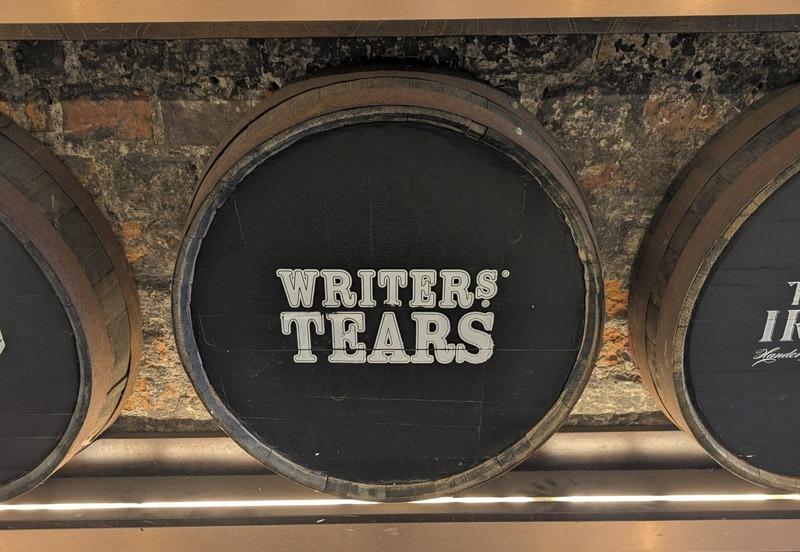
So there you have it: the main sessions I attended. From what I heard from other writers, almost all the sessions were of equally high quality and packed with great content. I’ve enjoyed the North American HNS conferences in the past, and it has been a delight to add the Australasian and UK ones now. In all three venues, I’ve found that it was easy to make friends and form bonds with writing colleagues. The Historical Novel Society is a must-join organization if you want to write historical fiction.